After the Toast: How the Late-Evening Window Became Companionship's Most Prized Reservation

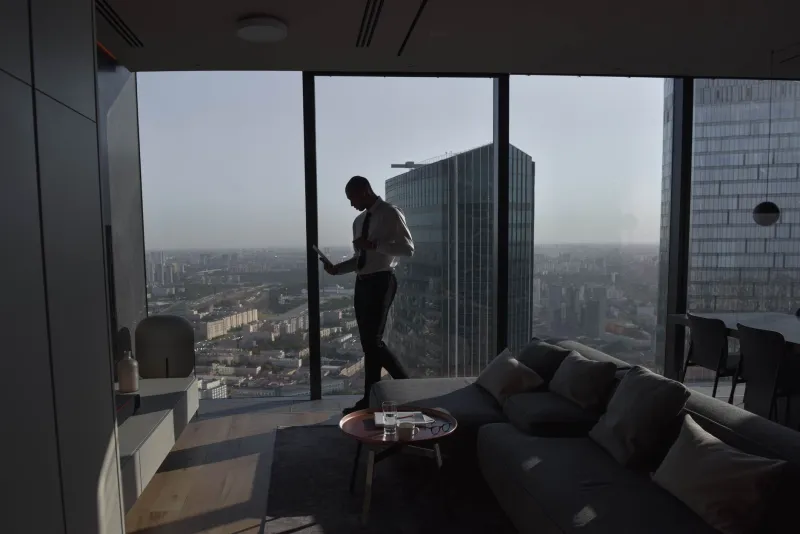
Photo: Robert Conforti, CC BY 4.0, via Wikimedia Commons
There is a particular hour in every major American city that belongs to no one and everyone. In Manhattan, it arrives around ten; in Chicago, perhaps a touch earlier; in Los Angeles, it drifts in whenever the traffic finally relents. The networking reception has ended. The client dinner has concluded. The phone has, at last, been set face-down on the nightstand.
Companions who work the premium tier of the market have a name for it, half-affectionate and half-professional: the velvet hour. And increasingly, it is the only slot their most discerning clients want.
The Death of the Leisurely Lunch
A decade ago, the daytime engagement was the bread and butter of high-end companionship. A long lunch, an afternoon gallery visit, a stroll that ended wherever it ended. That world has largely evaporated — not because the appetite for it disappeared, but because the schedules that once permitted it did.
The professionals who form the core client base of the modern companionship market — partners, founders, surgeons, attorneys — now treat their calendars as adversarial documents. Every block of daylight is spoken for weeks in advance. What remains, reliably, is the evening. And what remains within the evening, after the obligations are discharged, is the window from roughly nine o'clock onward.
The result is a structural migration. Companions report that bookings beginning at eight or nine in the evening now outnumber daytime engagements by a wide margin, and that clients increasingly request the end of an evening rather than its beginning: meet me after the dinner, after the event, after the performance. Arrive when the world has stopped watching.
Why Unhurried Time Became the Real Luxury
There is a straightforward reading of this shift: exhausted people want companionship that fits the cracks of their lives. But the more interesting reading is about what the velvet hour offers that daylight cannot.
A nine o'clock engagement begins with the performance already over. There is no need to be charming for the table, no colleagues to manage, no impression left to make. The client who books the velvet hour is, in a sense, booking the version of themselves that exists after the mask comes off — and they want a companion equipped for that person, not the public one.
Companions describe these engagements as qualitatively different. Conversations go deeper, faster. The usual warm-up rituals compress. There is a shared understanding that both parties have spent the day performing, and that the evening's unspoken contract is authenticity — or at least a more convincing approximation of it than either has managed since morning.
In an economy where time is the scarcest asset, the velvet hour represents something close to a contradiction: scheduled spontaneity. A fixed appointment whose entire purpose is to feel unfixed.
The Logistics of Late
The rise of the evening engagement has quietly reshaped the professional side of the industry. Companions now build their entire working lives around nocturnal hours, which means sleep schedules, safety planning, and transportation all require deliberate architecture. Late-night engagements in unfamiliar neighborhoods carry risks that a two o'clock lunch does not, and experienced companions are unsentimental about screening, check-in protocols, and the non-negotiables of personal security.
Clients, for their part, are learning their own etiquette of the late hour. The best of them confirm details earlier in the day rather than at ten at night. They arrange transportation in advance. They understand that a companion arriving at 9:30 has often spent the afternoon preparing, and that punctuality at the end of a long day is a form of respect that registers more deeply than any gift.
What the Velvet Hour Says About Us
It would be easy to read the trend as one more symptom of a compressed, overworked professional culture — and it is partly that. But there is something almost hopeful in it as well. The velvet hour exists because even the most scheduled lives refuse to surrender the idea that connection deserves protected time.
The after-dinner window is when the city exhales. It is when ambition briefly stops being the organizing principle of a person's day. That premium companionship has come to live in that window says less about the industry than about its clientele: people who can buy nearly anything, booking the one thing that must be given freely — genuine, unhurried attention.
The velvet hour, in other words, is not really a time slot. It is a state of mind, with a start time.